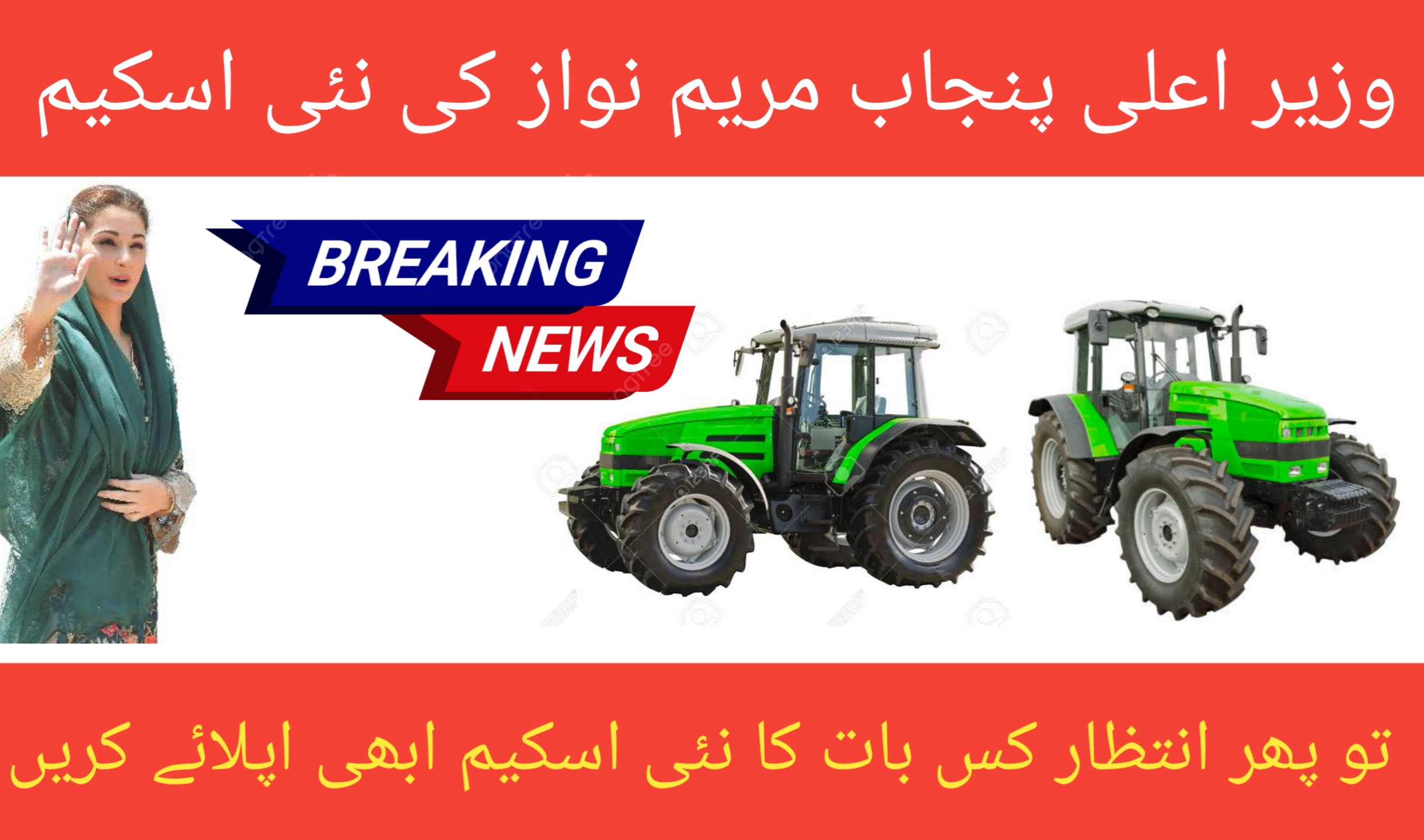
In the fertile plains of Punjab, where agriculture is not just an industry but the very lifeblood of the economy and culture, a new vision is taking root. The “Green Tractor Scheme,” championed by Punjab’s first woman Chief Minister, Maryam Nawaz Sharif, is more than a subsidy program; it is a bold political and economic statement aimed at revitalizing the province’s agricultural backbone. Launched amid high expectations and significant challenges, the scheme seeks to address decades of stagnation, technological lag, and farmer distress. Its success or failure could define not only Maryam Nawaz’s nascent premiership but also the food security and economic trajectory of Pakistan’s most populous province.
The Soil of Necessity: Understanding the Crisis
To appreciate the ambition of the Green Tractor Scheme, one must first diagnose the ailments plaguing Punjab’s agriculture. The sector, contributing over 20% to Pakistan’s GDP and employing nearly 40% of the workforce, has been caught in a low-productivity trap. The average Pakistani farmer contends with a trifecta of woes: an aging fleet of machinery, soaring input costs, and the devastating impacts of climate change.
The heart of the problem lies in mechanization. A significant portion of small and medium-scale farmers still rely on decades-old tractors or expensive rental services, limiting their efficiency, increasing turnaround time between crops, and constraining their ability to adopt modern precision farming techniques. This technological deficit translates directly into lower yields, higher post-harvest losses, and diminished profitability, pushing rural communities deeper into debt and poverty.
It is into this fray that Chief Minister Maryam Nawaz stepped, leveraging her party’s historical rural support base and her own narrative of a development-focused, modernizing leader. The Green Tractor Scheme is positioned as a direct intervention to break this cycle.
The Scheme’s Blueprint: Subsidies, Sustainability, and Inclusion
The Green Tractor Scheme is structured around several core pillars designed to maximize impact and reach:
-
Heavy Subsidies and Accessible Financing: The flagship component offers tractors and associated farm machinery (like seeders, harvesters, and laser land levelers) at up to 70% subsidy, with the remaining cost covered through soft loans from partner financial institutions. This dramatic reduction in the upfront cost is intended to bring mechanization within reach of the smallholder farmer, not just the large landowner.
-
A “Green” Mandate: True to its name, the scheme incorporates an environmental dimension. Preference is given to tractors that meet higher emission standards, and subsidies are particularly favorable for machinery that enables resource conservation. This includes equipment for precision planting, which reduces seed and water waste, and laser land leveling, which improves water efficiency by up to 35%. This aligns the program with global sustainable agriculture goals and attempts to build climate resilience.
-
Focus on Small and Women Farmers: In a potentially transformative move, the scheme earmarks a significant quota for small farmers (with landholdings under 12.5 acres) and women farmers. This inclusive approach aims to correct historical biases in agricultural support, empower women who are often the unseen managers of farm operations, and ensure the benefits of technology diffuse widely across the rural social fabric.
-
Local Industry and Job Creation: The scheme mandates that a high percentage of tractors and implements be sourced from local manufacturers. This is a strategic economic lever designed to boost Pakistan’s automotive and engineering sectors, create jobs in manufacturing and dealership networks, and reduce dependence on expensive imports, fostering a virtuous cycle of rural and industrial growth.
The Political Harvest: More Than Just Tractors
For Maryam Nawaz and the Pakistan Muslim League-Nawaz (PML-N), the Green Tractor Scheme is a multifaceted political instrument.
First, it is a powerful reaffirmation of the party’s traditional compact with rural Punjab. After a period of perceived urban-centric governance at the federal level, this massive rural intervention signals that the party—and its new provincial leader—has not forgotten its core constituency. It is an effort to rebuild and solidify the rural vote bank ahead of future elections.
Second, it establishes Maryam Nawaz’s executive persona. As a woman leading a conservative province, she is using this large-scale, technically detailed scheme to project an image of managerial competence, innovation, and a hands-on approach to problem-solving. It moves beyond symbolic politics to tangible, deliverables-based governance.
Third, it addresses national security concerns. By aiming to boost agricultural productivity, the scheme is fundamentally a food security initiative. In a nation perennially worried about wheat and sugar shortages, foreign exchange spent on food imports, and the impact of inflation on staple foods, increasing domestic yield is a matter of strategic national importance.
Thorny Fields: Challenges and Criticisms
Despite its ambitious scope, the Green Tractor Scheme navigates a landscape riddled with potential pitfalls.
-
Implementation & Corruption: Pakistan’s history is littered with well-intentioned subsidy schemes derailed by bureaucratic inertia, elite capture, and corruption. Ensuring transparent, merit-based distribution, preventing the formation of a black market for subsidy quotas, and delivering machinery efficiently will be a Herculean administrative task. The credibility of the entire program hinges on its execution.
-
Fiscal Sustainability: The province’s finances are strained. Funding a 70% subsidy for thousands of tractors requires enormous resources. Critics question whether this is a fiscally prudent long-term strategy or a politically expedient subsidy that could divert funds from other critical areas like rural health, education, and irrigation infrastructure.
-
Holistic Approach: A tractor alone is not a panacea. Farmers need affordable credit, reliable electricity and water, stable output prices, and access to quality seeds and fertilizers. The scheme risks becoming a white elephant if not embedded within a broader, coherent agricultural policy that addresses these interconnected issues. Mechanization without market access or fair pricing could leave farmers with higher productivity but the same, or even greater, debt.
-
Social Dynamics: Introducing high-value assets into a rural landscape marked by stark power inequalities can have unintended consequences. There are concerns that local power brokers (the zamindars or chaudhrys) could find ways to co-opt the scheme, using their influence to acquire the subsidized machinery and then rent it to small farmers on their own terms, thereby reinforcing existing hierarchies rather than disrupting them.
Sowing the Seeds of the Future
The ultimate success of the Green Tractor Scheme will not be measured by the number of tractors distributed, but by the tangible change in the fields and lives of Punjab’s farmers. Key performance indicators will include:
-
Yield Increase: Demonstrated growth in per-acre production of major crops.
-
Income Rise: Measurable improvement in net farm incomes and reduction in rural poverty indices.
-
Women’s Empowerment: Increased number of women as direct owners and operators of assets, with greater decision-making power.
-
Resource Efficiency: Documented savings in water and fertilizer use due to precision equipment.
If successfully implemented, the scheme could be the catalyst for a second green revolution in Punjab—one that is not just about higher output but about smarter, more sustainable, and more equitable growth. It could pivot the province’s agriculture from a survival-based activity to a modern, commercially vibrant sector.
Conclusion
Chief Minister Maryam Nawaz Sharif’s Green Tractor Scheme is a high-stakes gamble on the future of Punjab. It is an attempt to harness political will, fiscal resources, and technological innovation to solve a deep-seated economic problem. It carries the weight of her political legacy, the hopes of millions of farmers, and the food security of the nation.
The path ahead is fraught with administrative and financial challenges. Yet, in its ambition to marry productivity with sustainability, and growth with inclusion, the scheme offers a compelling vision. Whether this vision will flourish in the difficult soil of reality, or wither under the heat of implementation challenges, remains to be seen. One thing is certain: in the tractor’s rumble across Punjab’s fields, one can hear the echoes of a larger struggle—for progress, for equity, and for a sustainable harvest in an uncertain age. The coming seasons will reveal if the Green Tractor Scheme was merely a well-intentioned gesture or the true seed of an agricultural transformation.