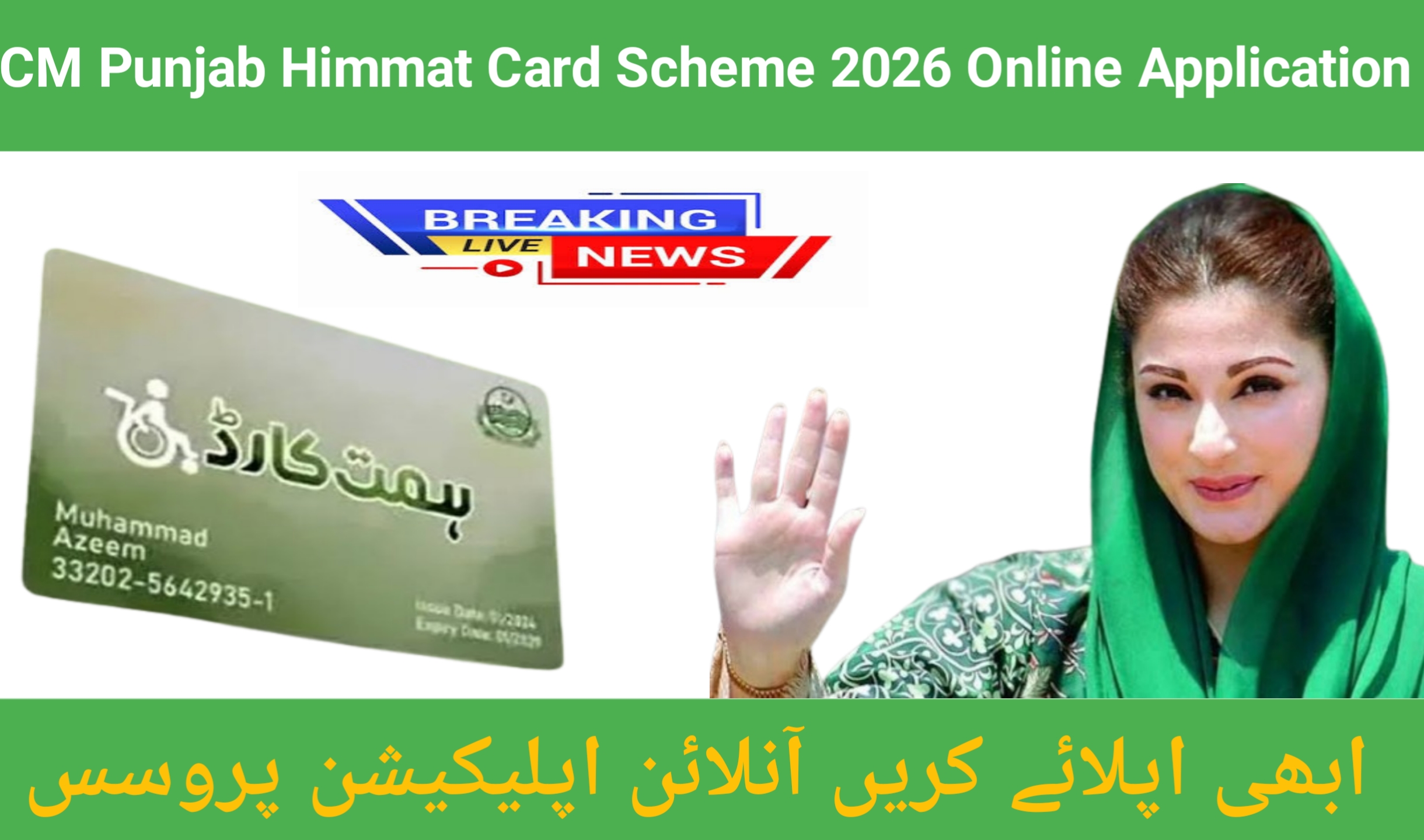
Understanding the Vision: Beyond Financial Aid
The Himmat Card, translating to “Courage Card,” is fundamentally designed to provide financial assistance and life insurance cover to women who are the primary breadwinners or key contributors to their families, particularly those from economically vulnerable sections. This includes widows, divorced women, abandoned wives, and women from Below Poverty Line (BPL) families.
The core philosophy of the program is twofold: immediate relief and long-term empowerment. It acknowledges that the loss of a male earner—through death, abandonment, or disability—can plunge a family into financial crisis. The Himmat Card acts as a social safety net, ensuring that women are not left destitute and can maintain a baseline of stability for themselves and their dependents.
Key Features and Benefits of the Himmat Card (2026)
For the 2026 cycle, the program is expected to build upon its existing framework with potential enhancements in benefits and streamlined processes. The standard features include:
-
Life Insurance Cover: A central component is a substantial life insurance policy (often in the range of ₹2-5 lakhs) in the name of the beneficiary woman. This sum is paid to her nominated family members in the event of her unfortunate demise, providing critical financial support during a period of immense emotional distress.
-
Accidental Death and Disability Benefit: Beyond natural causes, the card often provides additional coverage for accidental death or permanent disability, offering a layer of protection against unforeseen tragedies.
-
Financial Assistance/Scholarship Component: Many iterations of the scheme include a direct benefit transfer (DBT) for education, often provided for the woman’s children. This might be a monthly or annual scholarship to ensure that the family’s financial constraints do not force children, especially girls, to drop out of school.
-
Linkage to Other Welfare Schemes: The Himmat Card often serves as a gateway document, facilitating easier access to other government schemes related to housing (PMAY), livelihoods (Self-Help Group linkages), and health insurance (Ayushman Bharat).
-
Dignity and Social Recognition: Perhaps the most intangible yet vital benefit is the sense of identity and recognition it confers. Being a “Himmat Cardholder” officially acknowledges a woman’s role as the head of her household, bolstering her confidence and status within her community.
Eligibility Criteria for 2026 Registration
While specific criteria may be fine-tuned for the 2026 registration, they are generally based on the following pillars:
-
Residency: Must be a permanent resident of the state.
-
Gender and Status: The applicant must be a woman falling under categories such as widow, divorcee, legally abandoned, or from a designated BPL family.
-
Age: Typically, the beneficiary should be within the age bracket of 18 to 60 years.
-
Income Threshold: The family income must be below a specified ceiling, as defined by the state government.
-
Not a Beneficiary of Similar Schemes: Usually, the applicant should not be receiving similar benefits from other state or central government insurance/scholarship schemes.
The 2026 Registration Process: A Step-by-Step Guide
The registration process for the CM Himmat Card is designed to be accessible, with a blend of online and offline avenues. Here’s a likely pathway for 2026 applicants:
1. Documentation: Applicants must prepare a set of documents, which commonly include:
* Duly filled application form (available online or at seva kendras).
* Proof of identity (Aadhaar Card, Voter ID).
* Proof of residence (Ration Card, Utility Bill).
* Proof of status (Death certificate of husband for widows, divorce decree, certificate from competent authority for abandoned women).
* BPL certificate (if applicable).
* Bank account details (for DBT).
* Passport-sized photographs.
2. Application Submission:
* Online: The primary portal will likely be the official state government Sevā or E-District website. Applicants can register, fill the form, and upload scanned documents.
* Offline: For those with limited digital access, physical forms can be submitted at designated Common Service Centers (CSCs), Anganwadi centers, or block development offices.
3. Verification and Approval: Once submitted, the application undergoes rigorous verification by local authorities (revenue officer, block officer) to confirm eligibility and the authenticity of documents.
4. Card Generation and Disbursal: Upon successful verification, the digital Himmat Card is generated and linked to the beneficiary’s Aadhaar. The insurance cover becomes active, and any periodic financial assistance is credited directly to her linked bank account.
The Transformative Impact: Stories of Change
The true measure of the Himmat Card’s success lies in the lives it has touched. Consider the story of Sunita Devi (name changed), a widow from a rural district. After her husband’s death, she struggled to educate her two daughters while working as a daily wage laborer. The Himmat Card provided her not just with the security of an insurance cover but also a monthly educational stipend for her girls. “This card gave me the himmat (courage) to dream for my daughters again,” she says. For women like Fatima, who was abandoned by her husband, the card provided an official identity as the head of her family, enabling her to access a micro-loan to start a small tailoring unit.
Challenges and the Road Ahead for 2026
Despite its noble intent, the program faces challenges that the 2026 renewal must address:
-
Awareness Gaps: In remote areas, many eligible women remain unaware of the scheme.
-
Documentation Hurdles: Obtaining certificates, especially for abandoned women, can be a bureaucratic challenge.
-
Digital Divide: Over-reliance on online portals can exclude the most marginalized.
-
Timely Disbursal: Delays in verification or fund transfer can undermine trust in the scheme.
For 2026, the focus must be on aggressive grassroots outreach through ASHA and Anganwadi workers, setting up mobile registration camps, and further simplifying documentation. Integrating the Himmat Card database with other social security programs can create a more holistic support ecosystem.
Conclusion: A Card That Embodies Courage
The CM Himmat Card Program is more than a policy; it is a statement of intent. As registrations open for 2026, it represents a crucial opportunity to strengthen the state’s commitment to its women. It moves the narrative from viewing women as passive recipients of aid to recognizing them as active, courageous pillars of the family and the economy. By ensuring financial literacy sessions alongside card distribution and fostering linkages with skill development, the program can evolve from a safety net into a springboard for sustainable economic independence.
Ultimately, the Himmat Card is an investment in social stability and gender justice. It sends a powerful message to every woman battling adversity: you are not alone, your contribution is valued, and the state stands with you in your courage. The success of the 2026 registration drive will be a significant step towards building a more equitable, resilient, and empowered society for all.