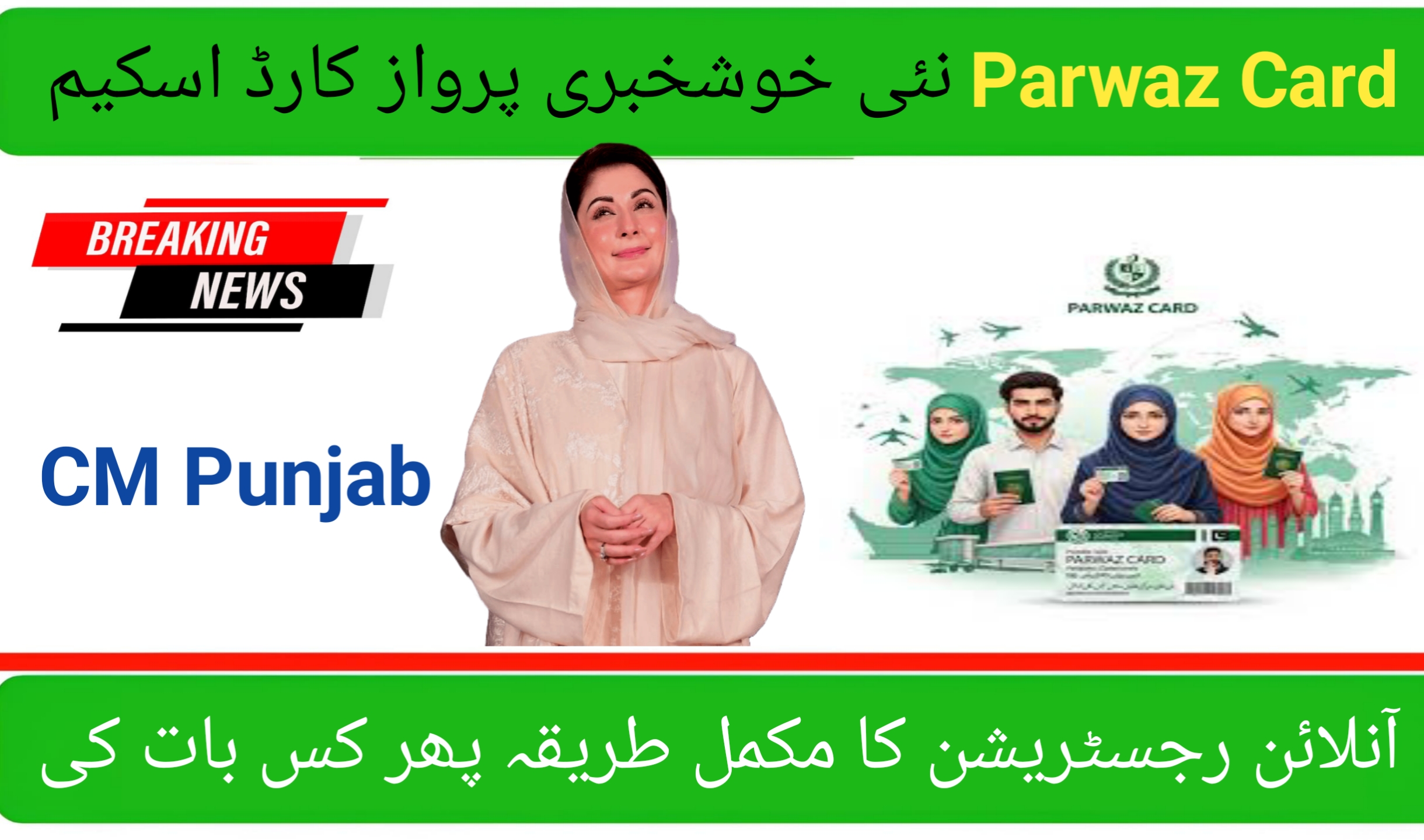
In the dynamic and often challenging landscape of Pakistani politics, where grand promises can sometimes dissolve into unmet expectations, the launch of a new public welfare scheme is met with both hope and scrutiny. When that scheme is championed by Pakistan’s first woman Chief Minister, Maryam Nawaz Sharif, and targets the nation’s most potent yet precarious demographic—its youth—it demands particular attention. The Parwaaz Card Scheme, unveiled as a cornerstone of CM Maryam Nawaz’s vision for Punjab, is more than a financial subsidy; it is a bold statement of intent, aiming to equip, empower, and elevate the province’s young generation into the drivers of economic progress.
Punjab, Pakistan’s most populous province, is a sea of youthful energy. Over 64% of the country’s population is under 30, a statistic that presents a double-edged sword: a potential “demographic dividend” of unprecedented productivity and innovation, or a ticking time bomb of disillusionment and unrest if aspirations are stifled by unemployment and lack of opportunity. For decades, the narrative for many graduates has been one of frustration—armed with degrees but devoid of practical skills, connections, or capital to launch their careers or enterprises. It is into this breach that the Parwaaz (which translates to “Flight” or “Soaring”) Card Scheme has been launched, with the explicit aim of transforming the youth from job-seekers into job-creators and skilled professionals.
Deconstructing the Parwaaz Card: More Than Just a Loan
At its functional core, the Parwaaz Card is a comprehensive financial and support package for Punjab’s youth aged 18 to 40. While details are being refined, its announced components paint a picture of multi-faceted intervention:
-
Interest-Free Loans: The flagship offering is the provision of interest-free business loans, reportedly up to Rs. 1 million. This directly attacks one of the biggest barriers to entrepreneurship in a conservative, risk-averse financial culture. By removing the burden of interest (riba), which is also a significant religious and ethical concern for many, the scheme aligns with both economic and socio-cultural sensibilities.
-
Educational and Skill Development Support: Beyond business, the scheme is designed to support academic and vocational advancement. This includes subsidies for tuition fees, funding for skill-based certification courses, and potentially support for technological tools like laptops. This acknowledges that empowerment requires both knowledge and market-relevant skills.
-
Mentorship and Network Access: Perhaps the most innovative aspect is the promise of connecting cardholders with successful entrepreneurs, industry leaders, and established business networks. For a young person, access to guidance and mentorship can be as valuable as capital, helping them navigate the practical pitfalls of starting and running a business.
-
Digital and Integrated Platform: The “card” itself suggests a move towards a digitized, efficient system for application, disbursement, and management, aiming to reduce bureaucratic red tape and promote transparency.
The Vision: A Paradigm Shift in Youth Development
CM Maryam Nawaz’s political narrative has been deeply interwoven with a modern, development-oriented agenda, often leveraging her background in science and administration. The Parwaaz Card is a concrete manifestation of this. Her vision appears to be threefold:
First, Economic Emancipation through Entrepreneurship. The scheme actively promotes a shift from a government-job-centric mindset to an entrepreneurial one. By seeding thousands of micro and small enterprises, the vision is to stimulate local economies, foster innovation, and create a ripple effect of employment. Each successful loan recipient is not just a beneficiary but a potential employer.
Second, Inclusivity and Meritocracy. By targeting students, fresh graduates, and young professionals across Punjab, the scheme aims to level the playing field. It promises opportunity based on merit and viable business plans, rather than connections (sifarish) or wealth. For young women, in particular, who face additional societal and mobility barriers, such a structured platform could be transformative, offering a legitimate and supported pathway to economic independence.
Third, Changing the Social Contract with the State. For the youth, often disillusioned with political processes, the Parwaaz Card represents the state not as a distant authority, but as an active partner in their personal development. It reframes the relationship from one of dependency to one of collaborative investment in the future. This is crucial for social stability and rebuilding trust in public institutions.
Navigating the Turbulence: Challenges and Considerations
However, the flight path for Parwaaz is not without potential turbulence. The success of such an ambitious scheme hinges on overcoming formidable historical and administrative challenges.
-
Sustainability and Scale: Interest-free loan schemes require massive, consistent funding. The question of whether the Punjab government can secure and sustain the necessary fiscal resources, especially in a strained economic climate, is paramount. Will it be a widespread program or one limited to a select few?
-
Bureaucratic Efficacy and Corruption: Pakistan’s history is littered with well-intentioned schemes derailed by inefficiency, complex procedures, and corruption. The digital platform must be robust, and the process from application to disbursement must be swift, transparent, and insulated from political interference. The mentorship component must be substantive, not just ceremonial.
-
Beyond Finance: The Ecosystem Gap: A loan alone does not guarantee business success. Entrepreneurs need a supportive ecosystem: reliable electricity, digital infrastructure, ease of doing business, and access to larger markets. The Parwaaz Scheme must be part of a broader, coordinated policy effort to improve Punjab’s overall business climate.
-
Measuring Impact: Success cannot be measured merely by loans disbursed. Key metrics will be business survival rates, jobs created, increase in female participation, and the generation of new economic activity. A rigorous, independent monitoring and evaluation framework is essential.
A Flight Towards the Future
The Parwaaz Card Scheme arrives at a critical juncture. Pakistan’s youth are digitally connected, globally aware, and brimming with untapped potential. Yet, they are also grappling with inflation, unemployment, and a sense of uncertainty. CM Maryam Nawaz has, with this scheme, placed a significant bet on their capabilities.
Its ultimate legacy will depend on execution. If implemented with integrity, efficiency, and at scale, the Parwaaz Card could indeed catalyze a quiet revolution. It could populate Punjab’s towns and cities with a new generation of small business owners, skilled IT professionals, and innovative social entrepreneurs. It could empower young women, revitalize local industries, and foster a culture of self-reliance.
Conversely, if it succumbs to the pitfalls of patronage and poor management, it risks becoming another unfulfilled promise, deepening the cynicism it seeks to dispel.
Conclusion: More Than a Card, a Covenant
The Parwaaz Card Scheme is, in essence, a covenant between the leadership of Punjab and its future. It is CM Maryam Nawaz’s most definitive policy articulation of her commitment to the youth. It recognizes that the province’s greatest asset is not its land or resources, but the energy and intellect of its young people. By providing them with the financial wings and navigational tools to soar, the scheme aspires to launch not just individual careers, but the entire province onto a new trajectory of inclusive and sustainable growth. The take-off has been announced; the world now watches to see if Parwaaz can truly achieve the altitude of its ambitions, turning a visionary flight plan into a tangible reality for millions of young Punjabis yearning for the sky.