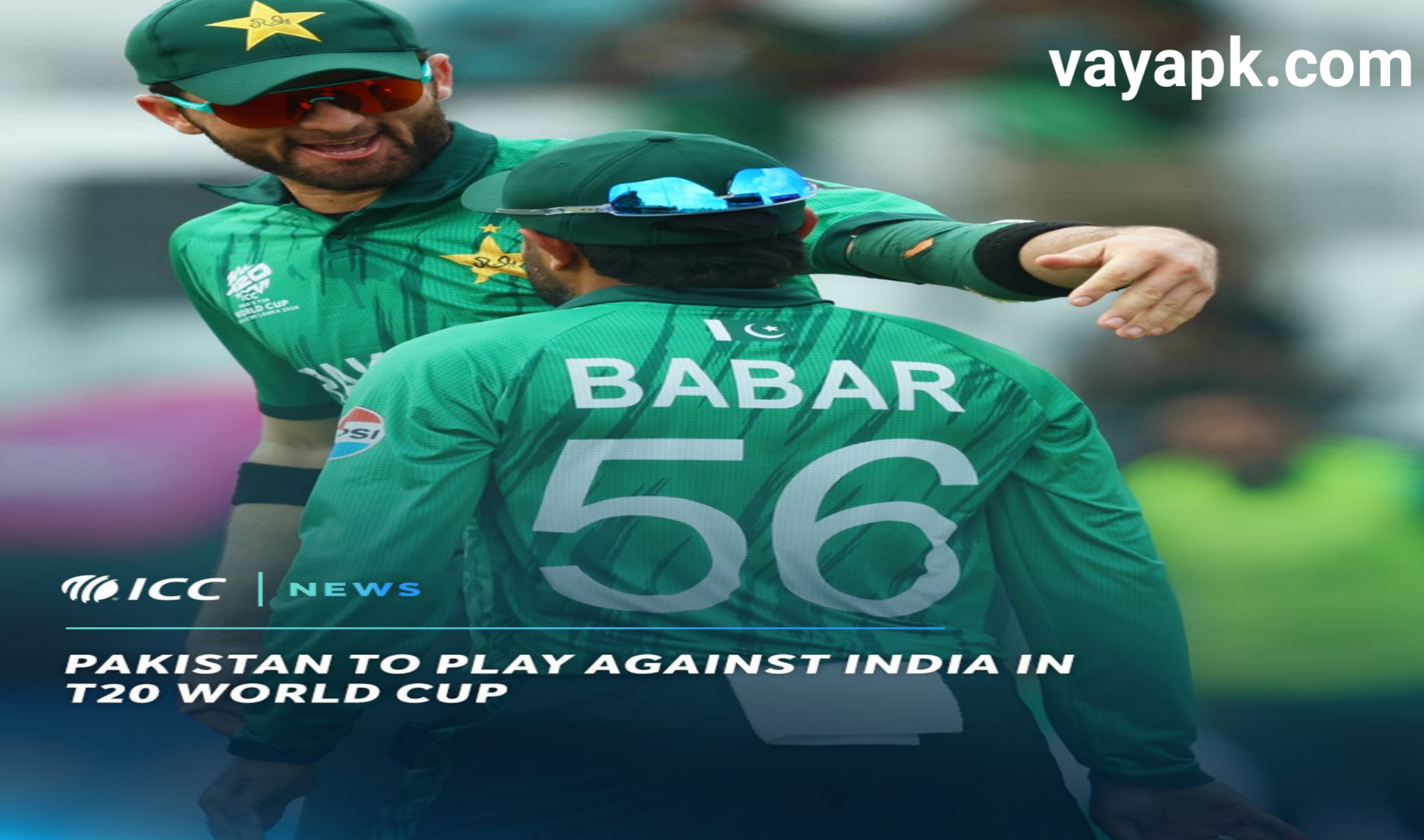
The International Cricket Council (ICC) has uttered the sentence that sends a simultaneous, seismic jolt across two nations comprising nearly two billion people: India and Pakistan will play a cricket match on February 15, 2026. This is not merely a fixture announcement; it is the scheduling of a shared heartbeat, the calibration of a cultural supernova, and the reignition of the world’s most intense, politically charged, and emotionally draining sporting rivalry. For the first time in years, the confirmation comes not as a hopeful rumour or a tense negotiation, but as an official decree on the Future Tours Programme, setting the stage for a clash that will command the attention of the globe.
While the exact tournament context is yet to be finalised—likely a marquee encounter in a yet-to-be-announced ICC event or a dedicated bilateral series—the date itself, 15/02/2026, is now etched in stone. It lands at a time when the cricketing calendar is evolving, with franchise leagues extending their reach, yet it serves as a potent reminder of the unparalleled power of international cricket’s crown jewel. This confirmation is a strategic masterstroke by the ICC, a deliberate re-centring of the sport’s narrative around its most valuable asset. It acknowledges a simple, undeniable truth: no league, no domestic derby, no Ashes test, generates the sheer, raw, visceral energy of an India-Pakistan match.
The Weight of History: More Than a Game
To understand the magnitude of this confirmation, one must look beyond the boundary ropes. An India-Pakistan match is a living, breathing historical drama. It is a 22-yard stage upon which the shared and sundered histories of the subcontinent are played out in real-time. Every delivery is laden with the baggage of partition, the memory of wars, the flickering hope for peace, and the fierce, unyielding pride of two distinct national identities. It is sport as geopolitics, as catharsis, as nationalism, and as a fragile, temporary bridge.
The players carry an immense burden, aware they are not just athletes but symbols. Legends are forged in this furnace: Javed Miandad’s last-ball six in Sharjah, Sachin Tendulkar’s masterful 98 in Centurion, Virat Kohli’s sublime chase in Melbourne, or Babar Azam’s elegant authority in Dubai. These moments are not merely statistics; they are chapters in a national folklore, recited and remembered with religious fervour. For fans, the days leading up to the match are a ritual of anxiety, bravado, and superstition. Offices empty, streets fall silent, and an entire region holds its breath. The result dictates the emotional weather for weeks—a victory sparking euphoric, flag-waving celebrations, a defeat plunging a nation into a sombre, reflective mourning.
The 2026 Landscape: A New Generation’s Rite of Passage
By February 2026, the cricketing landscape will have evolved significantly. The current stalwarts—the Kohlis, the Shamis, the Rizwans, the Shaheens—may be in their twilight, passing the torch to a new generation. We could witness the rise of a fresh-faced Indian prodigy facing the thunder of a Pakistani pace sensation barely out of his teens. This match will be a rite of passage for them. They will inherit the legacy and learn, in the most brutal and public way, what it means to bear the hopes of millions.
The tactical battle will be fascinating. Will India’s traditionally robust batting machinery, potentially powered by a new era of aggressive batters, dominate? Or will Pakistan’s seemingly endless conveyor belt of raw, fast-bowling talent unleash a fury that dismantles the best-laid plans? The chess match between captains—perhaps a strategic, data-driven Indian skipper against an instinctive, aggressive Pakistani leader—will be a narrative within the narrative. The match will be a showcase of modern cricket’s evolution: advanced analytics, relentless athleticism, and explosive power-hitting, all set against a backdrop of ancient rivalry.
The ICC’s Role: Custodians of a Global Spectacle
The ICC’s explicit confirmation is a proactive move of immense importance. For too long, this fixture has been held hostage by the turbulent tides of diplomatic relations. By anchoring it firmly within the official international schedule, the ICC asserts its role as the custodian of the sport’s greatest spectacle. It provides certainty for fans, broadcasters, and sponsors, transforming the match from a periodic possibility into a guaranteed global event.
The commercial implications are staggering. The 2026 encounter is poised to shatter every broadcasting and digital engagement record. Sponsorship deals will be at a premium, with brands clamouring for a piece of the unparalleled eyeball real estate. The host city—whether it be Dubai, Melbourne, London, or elsewhere—will experience an economic windfall, as fans from the diaspora and beyond descend in a colourful, passionate wave. The ICC, in confirming this, has not just scheduled a match; it has activated a multi-billion-dollar economic engine.
Beyond the Hype: A Force for Unity and a Mirror to Society
Yet, to view this match solely through the lenses of history, sport, and commerce is to miss its deeper, more complex resonance. In an era of fragmented media and polarised politics, an India-Pakistan match remains one of the last true collective experiences. In both countries, it cuts across all divides—caste, class, religion, language. Rickshaw drivers and CEOs share the same anxiety; students in hostels and families in living rooms are united in a single, pulsing hope.
The match also serves as a powerful, if temporary, connector for the diaspora. In the stands of a neutral venue, you will see a sea of green and blue, often sitting side-by-side, their rivalries expressed in chants and banter, but underpinned by a shared cultural heritage. It is a rare space where the commonalities of food, language, and a love for cricket momentarily overshadow the differences.
However, the spectacle is not without its dark side. The match can also magnify the worst of nationalist jingoism, with players sometimes subjected to vicious online abuse in defeat. The pressure can be crushing, and the narrative often strays from sport into dangerous, hyper-nationalist territory. The media in both nations plays a dual role—stoking the fires of rivalry for ratings, while also bearing the responsibility of keeping the discourse respectful. The 2026 match will be a test of whether the cricketing ecosystem has matured enough to celebrate fierce competition without descending into toxicity.
Conclusion: The Date the Cricket World Stops
February 15, 2026, is now a date circled in red on the global sporting calendar. The ICC’s confirmation of India vs. Pakistan is a gift to cricket lovers worldwide, a promise of a day where time stands still. It will be a day of unrivalled tension, breathtaking skill, and raw, unfiltered emotion. It will be a festival for some and a trial by fire for others.
As the clock ticks down to that day, the anticipation will build into a crescendo. New heroes will prepare to write their names into legend, while old ghosts of past encounters will be invoked. The world will watch, mesmerized by the sheer scale of the passion on display.
Ultimately, this match is a testament to cricket’s enduring power. It proves that in a fractured world, sport can still create a singular, consuming narrative that commands universal attention. It is a drama of skill and nerve, yes, but also of identity, memory, and hope. On February 15, 2026, in a cricket ground somewhere in the world, a ball will be bowled, and for the next several hours, history will not be something read in books—it will be felt in the pounding of billions of hearts. The rivalry is renewed. The countdown has begun.