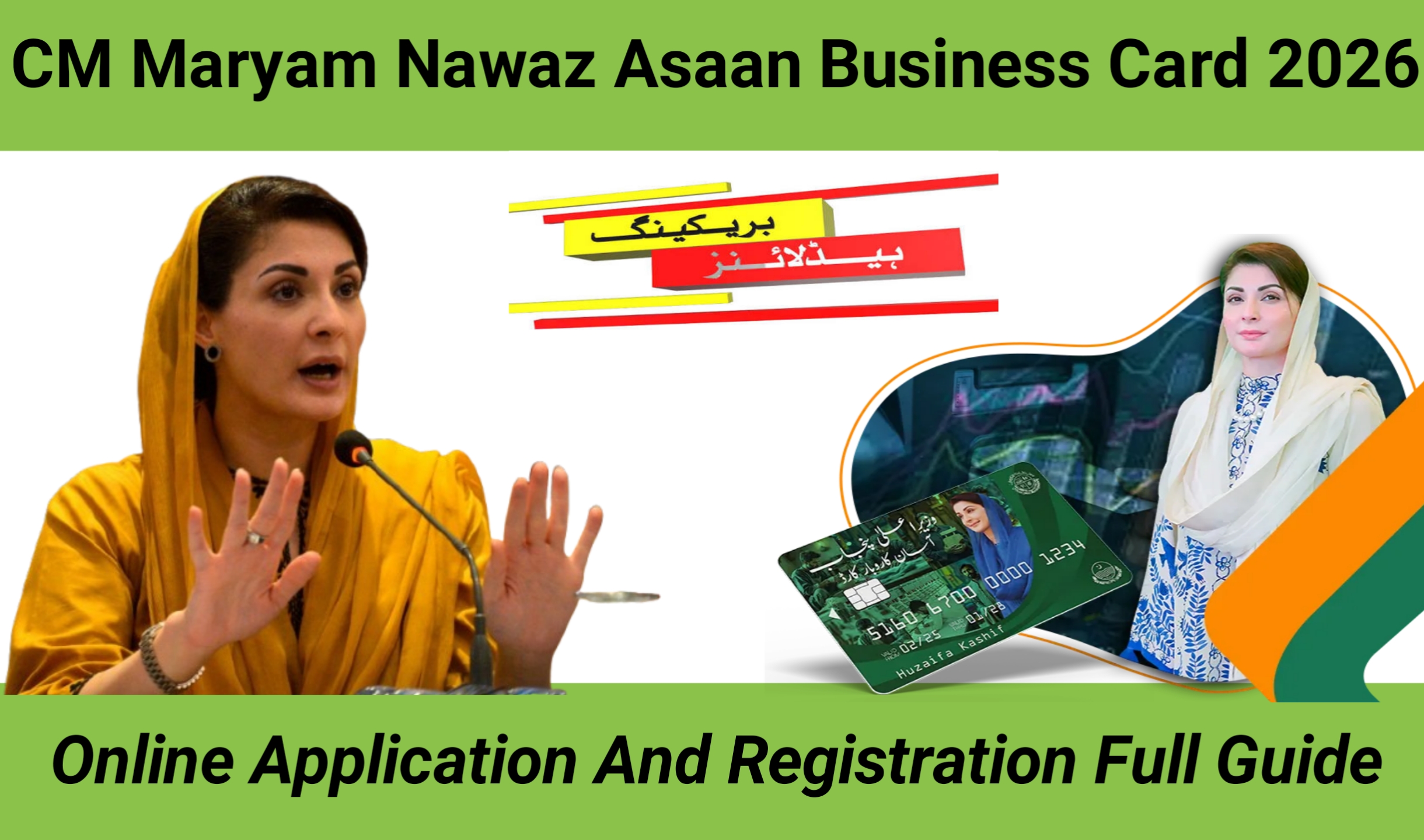
In the bustling bazaars of Lahore, the nascent tech hubs of Islamabad, and the small-scale workshops of Karachi, a common refrain among aspiring and established business owners has long concerned the labyrinth of regulatory compliance. The “red tape” – a colloquialism for bureaucratic inertia and complex paperwork – has stifled innovation, encouraged informality, and deterred foreign investment for decades. In 2026, the government of Pakistan, under the leadership of Prime Minister Maryam Nawaz, is championing a revitalised and expanded Asaan Business Scheme as a cornerstone of its economic policy, promising a transformative leap from a culture of compliance to one of facilitation. But is this digital initiative the silver bullet for Pakistan’s entrepreneurial challenges, or merely a sophisticated layer atop deeper, systemic issues?
From Concept to Core Policy: The Evolution of Asaan Business
The original Asaan (Easy) Business initiatives, traceable to earlier administrations, aimed at simplifying business registration. However, the 2026 iteration, personally advocated by PM Maryam Nawaz, represents a more ambitious vision. It is no longer just about starting a business but about nurturing its entire lifecycle. The scheme’s core philosophy pivots on a whole-of-government digital approach, seeking to integrate disparate agencies into a single, accessible platform.
The key pillars of the 2026 scheme include:
-
Unified Digital Portal 2.0: A comprehensive one-stop-shop extending beyond registration to encompass tax filings (FBR), social security registration (EOBI, SESSI), environmental approvals, and municipal licences. The promise is a single digital dashboard for all business-government interactions.
-
Automated Compliance and AI-Driven Guidance: Leveraging artificial intelligence, the platform aims to provide personalised compliance calendars, automated form-filling using pre-existing data, and real-time guidance on regulatory changes tailored to a business’s sector and size.
-
Financial Ecosystem Integration: A critical new component is the direct linkage with the formal financial sector. The portal intends to facilitate access to digital banking, connect eligible SMEs with credit guarantee schemes, and streamline applications for government-backed loans and grants, thereby addressing the perennial issue of capital access.
-
Sector-Specific Fast Tracks: Recognising that a one-size-fits-all approach fails, the scheme proposes “regulatory sandboxes” and fast-track lanes for high-priority sectors such as IT exports, agro-processing, and renewable energy, allowing for quicker testing and scaling of ideas.
-
Decentralisation and Physical Access Points: Acknowledging Pakistan’s digital divide, the plan includes expanding physical Asaan Business Kiosks in district chambers of commerce and bank branches, providing assisted digital services to entrepreneurs in semi-urban and rural areas.
The Potential Impact: Catalysing a Formal, Flourishing Economy
The promised benefits of a fully realised Asaan Business Scheme 2026 are substantial. Firstly, it could trigger a massive formalisation wave. By drastically reducing the time, cost, and complexity of formal registration, millions of informal enterprises might find the benefits of legality—access to credit, legal protection, government contracts—outweighing the costs. This would expand the tax net organically, not through coercive measures, but through attractive inclusion.
Secondly, it positions Pakistan to harness its demographic dividend. With over 60% of the population under 30, the scheme is a direct appeal to young, tech-savvy entrepreneurs. By creating a regulatory environment that rivals regional competitors, it aims to stem brain drain and foster a “start-up Pakistan” ecosystem where ideas are scaled from Peshawar to Hyderabad without the founder’s spirit being crushed by procedural delays.
Thirdly, for foreign investors, a transparent and efficient digital regulatory interface significantly lowers the perceived risk and “hassle factor” of operating in Pakistan. It signals a government moving towards predictability and ease-of-doing-business, a crucial metric in global capital allocation decisions.
The Implementation Abyss: Challenges and Critical Questions
However, the annals of Pakistani governance are replete with well-intentioned schemes that faltered at the altar of execution. The Asaan Business Scheme 2026 faces a gauntlet of formidable challenges:
-
Inter-Agency Silos and Bureaucratic Resistance: The scheme’s success hinges on seamless data sharing and process integration across fiercely independent federal and provincial departments (e.g., FBR, SECP, provincial labour and revenue departments). Overcoming entrenched institutional silos and the potential resistance of a bureaucracy accustomed to discretionary power is a Herculean task. Digitalising a broken process only creates a faster broken process.
-
Digital Infrastructure and Literacy: While 4G penetration is high, reliable broadband, digital literacy, and trust in online systems are not universal. The digital divide could exclude the very small, rural-based entrepreneurs the scheme hopes to empower, risking the creation of a two-tier business landscape.
-
The Cybersecurity Imperative: A centralised repository of sensitive business and financial data is a prime target for cyberattacks. Building and maintaining a fortress-like cybersecurity framework is non-negotiable, requiring continuous investment and expertise.
-
Beyond Registration: The Persistent Structural Issues: Registration is the first hurdle, not the last. Entrepreneurs still face unreliable power supply, political instability, judicial delays, and macroeconomic headwinds like inflation and currency volatility. An easy business portal cannot, by itself, fix these macro-level problems. It risks being a sleek digital front-end to a system whose backend remains clogged.
-
Sustainability and Political Will: The most significant risk is of this being a pet project tied to a particular political tenure. True transformation requires bipartisan commitment and institutional embedding so that the platform evolves and is maintained across political cycles. Will the scheme survive beyond the current administration?
A Verdict of Cautious Optimism
The Asaan Business Scheme 2026 is, without doubt, a step in the right direction. It reflects a modern understanding of economic governance where the state acts as a platform provider rather than a gatekeeper. Maryam Nawaz’s government has correctly identified digitalisation as the vehicle for regulatory reform.
However, the scheme should be viewed not as a panacea, but as a necessary enabler. Its ultimate success will not be measured by the number of businesses registered online, but by whether those businesses then find it easier to operate, secure capital, and thrive in the real economy. It must be part of a broader, coherent economic strategy addressing energy, stability, and macroeconomics.
The true test will be in the implementation—the grinding, unglamorous work of changing bureaucratic culture, ensuring uninterrupted funding, and iterating the platform based on user feedback. If Pakistan can navigate these challenges, the Asaan Business Scheme 2026 could indeed become the digital bridge connecting the nation’s vast entrepreneurial energy to a future of formal, sustained, and inclusive growth. If it fails, it will join the archive of good ideas that promised much but delivered little. The coming years will reveal whether this digital vision can cut through the enduring tangles of Pakistan’s red tape.