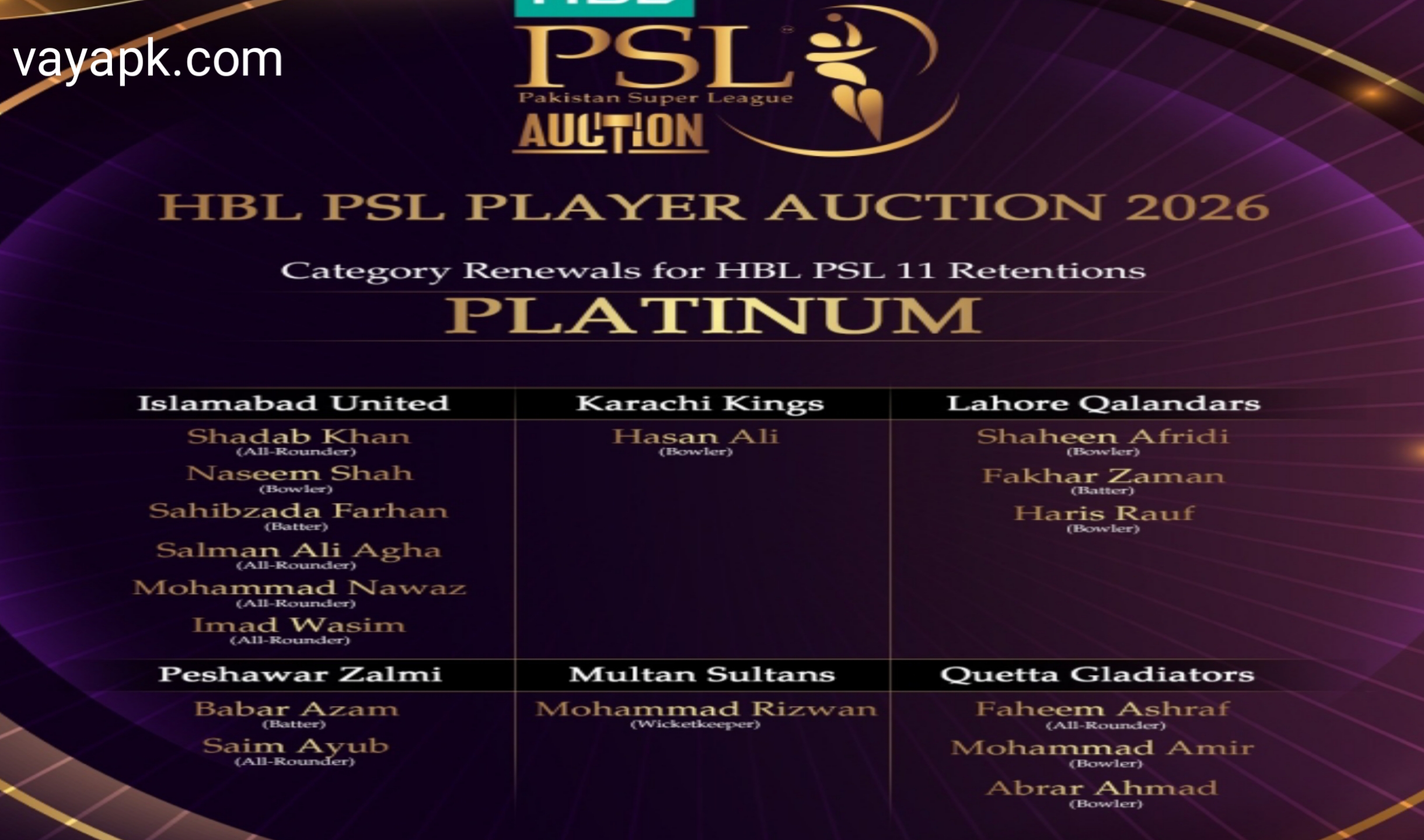
The Pakistan Cricket Board (PCB) has announced the renewal and revision of local player categories for the upcoming edition of the HBL Pakistan Super League (PSL), a move that promises to reshape team dynamics, enhance competitive balance, and further invest in the nation’s cricketing future. This decision, which comes amid much anticipation from fans and franchises alike, is not merely an administrative update but a significant strategic intervention aimed at strengthening the very ecosystem of Pakistani cricket.
Understanding the Category System
To appreciate the impact of this renewal, one must first understand the structure it governs. The PSL, like many franchise leagues, operates a player categorization and draft system. Local Pakistani players are placed into different categories—Platinum, Diamond, Gold, Silver, Emerging, and Supplementary—based on their performance, experience, marketability, and potential. Their category determines their salary cap hit and the round in which they can be picked during the draft.
The “renewal” process involves a committee reviewing the performances from the previous PSL season, recent international duties, and domestic form to re-evaluate each player’s standing. Promotions and demotions across categories are a natural outcome, rewarding excellence and ensuring a meritocratic flow. This year’s renewal, however, appears to carry additional layers of nuance and long-term vision.
Key Shifts and Notable Movements
While the official list is meticulously scrutinized by franchises, several trends are evident. Consistent performers from the last PSL, especially young talents who stepped up in high-pressure situations, have rightly seen upgrades. For instance, emerging stars like fast bowlers who displayed death-over prowess or batters with high strike rates in the middle order have likely jumped from Silver or Emerging brackets into Gold.
Conversely, established players who had a quiet season or are navigating a dip in form may find themselves in a lower category, increasing their value proposition for teams looking for experience at a more manageable draft cost. This fluidity is healthy; it ensures the draft remains unpredictable and that teams can build diverse strategies. A Platinum player is expected to be a marquee, match-winning anchor, while a shrewd pick in the Silver round can become the tournament’s most cost-effective asset.
The Strategic Ripple Effect on Franchises
The category renewal forces all six franchises back to the drawing board. Their retention and right-to-match card strategies are directly influenced by these changes. A player elevated to Platinum becomes a more significant retention investment, potentially forcing a team to choose between two core stars. Conversely, a demoted veteran becomes an enticing prospect for a rival franchise seeking leadership and skill at a discount.
This system inherently promotes parity. A team that struggled in the previous season gets the advantage of an earlier draft pick, potentially allowing them to snap up a newly categorized star. It encourages meticulous talent scouting beyond the obvious names, as the real draft victories are often found in the Emerging and Supplementary rounds. The renewal, therefore, doesn’t just affect the players; it kick-starts the pre-tournament cerebral warfare among team think-tanks.
Beyond the Draft: Bolstering Pakistan’s Cricket Pipeline
The most profound impact of the category system renewal is on Pakistan’s domestic cricket landscape. The PSL has always been lauded as a direct feeder to the national team, unearthing talents like Shadab Khan, Shaheen Shah Afridi, and Haris Rauf. The updated categories formalize this pathway.
By rewarding outstanding domestic performers with higher categories, the PCB sends a powerful message to every player grinding in the Quaid-e-Azam Trophy or the National T20 Cup: performance is currency. A blistering season in domestic circuits can catapult a relative unknown into the PSL draft’s Emerging category, and from there, onto the national radar. This creates a virtuous cycle where domestic tournaments gain greater significance, raising the overall standard of play across the country.
Furthermore, the “Emerging” category mandate, which requires each team to field a certain number of young, lesser-experienced players, is reinforced by this annual review. It ensures a constant infusion of new blood, preventing teams from relying solely on established veterans. For the players, sharing a dressing room with international icons provides an irreplaceable education in professionalism, technique, and handling pressure.
Economic Implications and Player Welfare
The categories are intrinsically tied to player remuneration. A higher category means a better base salary, translating into financial security and reward for merit. This is crucial in a sports career known for its volatility. For young athletes, the leap from an Emerging to a Silver or Gold category can be life-changing, validating years of sacrifice and hard work.
From the league’s perspective, a transparent and performance-based categorization system enhances its credibility. It assures fans and sponsors that the league is competitive and fair, with teams built on talent and strategy rather than opaque negotiations. This integrity is key to the HBL PSL’s continued commercial growth and its ability to attract top-tier international talent alongside local stars.
Challenges and Considerations
The system, while largely praised, is not without its challenges. The categorization committee carries a heavy burden. Subjective judgments can sometimes spark debate—does a legendary player with diminishing T20 returns deserve Platinum status on reputation? How does one weigh consistent domestic form against occasional PSL flashes? The PCB must ensure this process remains transparent and data-informed, leveraging advanced metrics alongside expert observation to maintain universal respect.
There’s also the delicate balance between rewarding youth and respecting experience. A league devoid of its seasoned campaigners loses narrative depth and mentorship quality, while one resistant to new talent stagnates. This year’s renewals seem to acknowledge this balance, aiming to create a hybrid environment where the past, present, and future of Pakistani cricket can coexist and thrive.
Conclusion: A Renewal for the Future
The renewal of local player categories for the HBL PSL is far more than an annual administrative ritual. It is the recalibration of the league’s competitive engine. It directly influences team compositions, draft drama, and the financial and motivational landscape for Pakistan’s cricketers.
Most importantly, it solidifies the PSL’s role as the bedrock of Pakistani cricket. By tightly linking domestic performance to PSL opportunity and, by extension, national team selection, the PCB has created a cohesive, merit-based ecosystem. As the new categories are unveiled and the draft strategy sessions begin, one thing is certain: this renewal will set the stage for another thrilling chapter of PSL action, where unknown heroes will be minted, legends will defend their status, and the relentless, vibrant future of Pakistani cricket will be on full display. The board’s commitment to refining this system year-on-year is a testament to a simple, powerful philosophy: in Pakistan cricket, performance must always have its just reward.