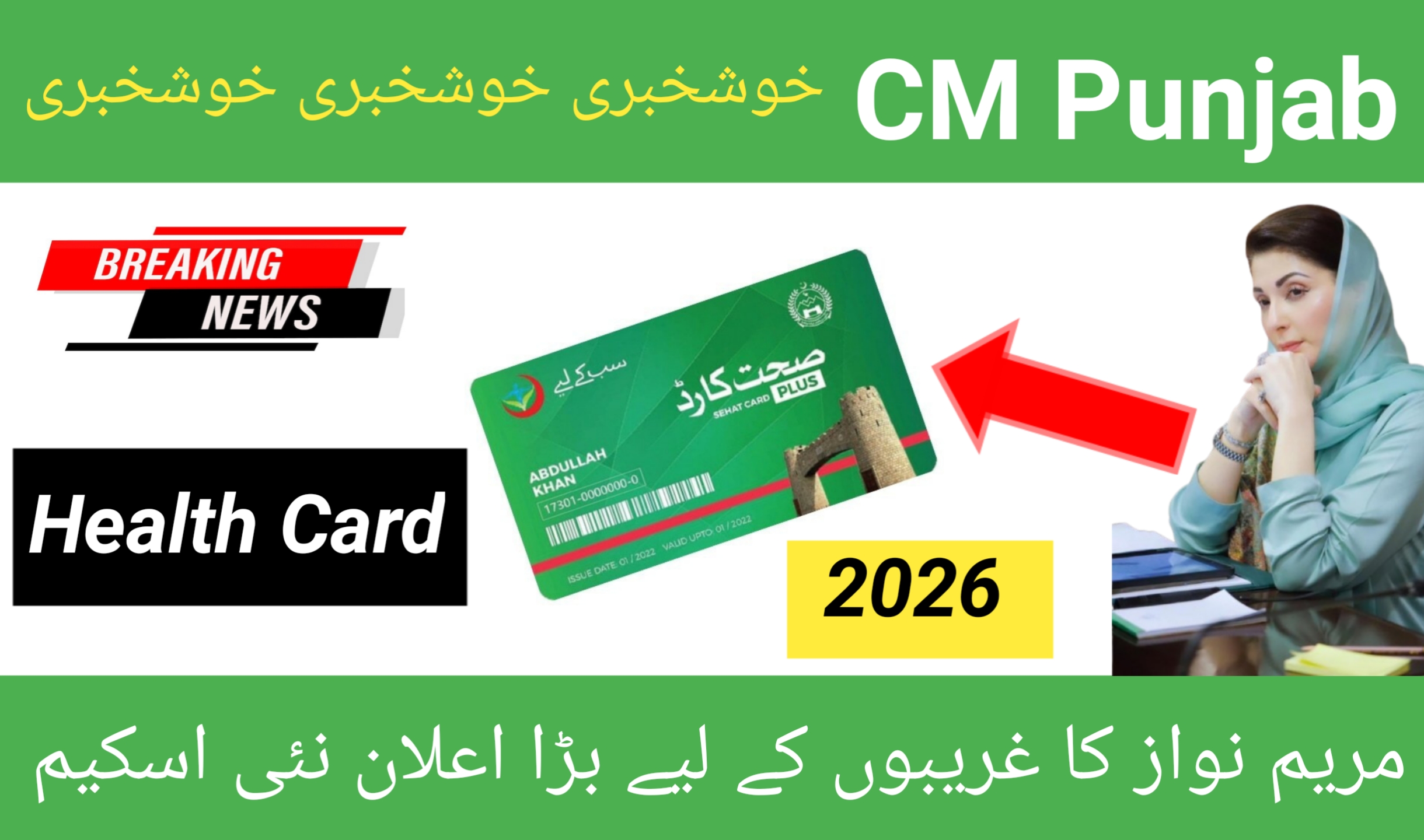
In the landscape of Pakistani public health, few initiatives have captured public attention and need as potently as the Punjab Health Card Scheme. Under the dynamic stewardship of Chief Minister Maryam Nawaz, this program has been reinvigorated and rebranded, evolving into a more accessible, comprehensive, and digitally-enabled lifeline for millions. The Maryam Nawaz Health Card Scheme represents not just a policy shift but a fundamental re-imagining of how healthcare security can be delivered in a populous, developing province. At the heart of this transformation lies its online application system—a gateway designed to dismantle barriers and place vital healthcare coverage directly into the hands of citizens.
The Vision: Universal Health Coverage, One Family at a Time
The scheme’s core objective is ambitious yet straightforward: to provide every eligible family in Punjab with access to quality healthcare without the crippling fear of financial ruin. It builds upon the foundation of the earlier Sehat Sahulat Program but expands its ambit with a renewed focus on inclusivity and ease of access. Under Maryam Nawaz’s leadership, the vision has been to create a seamless, transparent, and user-centric system.
Each eligible family receives coverage of up to 1 million Pakistani Rupees per year for a wide range of medical treatments. This includes, but is not limited to, cardiac surgeries, cancer treatments, orthopedic procedures, neurosurgical interventions, and maternity care. The coverage is operable at a vast network of both public and private empaneled hospitals across Punjab and even extends to federal territory hospitals in some cases, ensuring patients are not limited by geography.
The Digital Gateway: Online Application Demystified
The most revolutionary aspect of the current scheme is its emphasis on digital accessibility. The online application process is designed to be the primary, first-point-of-call for citizens, minimizing bureaucratic hurdles. Here is a step-by-step breakdown of how to apply:
-
Access the Portal: The journey begins at the official Punjab Health Card website or the dedicated Sehat Sahulat Portal. This is the centralized, authoritative source for all information and applications.
-
Registration: Applicants are required to enter the head of family’s Computerized National Identity Card (CNIC) number. The system cross-references this with the National Database and Registration Authority (NADRA) data to verify eligibility based on pre-defined socio-economic criteria (often linked to poverty score assessments).
-
Data Verification & Entry: Once the CNIC is validated, the system auto-populates basic details. The applicant then provides additional required information, such as family details (linked through NADRA’s family tree), contact number, and residential address.
-
Submission & Confirmation: After reviewing the information, the applicant submits the form. A confirmation message, often via SMS on the registered mobile number, is sent. This message typically contains a reference number for tracking.
-
Card Delivery: Upon successful verification, the physical health card is dispatched to the registered address. Importantly, even during the processing period or if the physical card is not yet in hand, families can often access services at hospitals using the head of family’s CNIC, which is linked to the digital database.
Why the Online System is a Game-Changer
The shift to a robust online application platform addresses historical pain points in public welfare distribution:
-
Transparency and Reduced Corruption: Digital trails minimize opportunities for intermediaries to manipulate applications or demand bribes. Eligibility is determined by data, not discretion.
-
Convenience and Time-Saving: Citizens can apply from their homes or local digital kiosks, saving immense time, travel cost, and the frustration of waiting in long queues at government offices.
-
Scalability and Efficiency: The system can handle millions of applications simultaneously, allowing for rapid scaling of the scheme to meet its universal targets. It streamlines backend verification for authorities.
-
Empowerment and Awareness: The portal serves as an information hub, educating citizens about their entitled benefits, covered medical conditions, and network hospitals, fostering a more informed user base.
Impact and Reception: A Mixed Verdict of Hope and Challenges
The social impact of the scheme is profound. Testimonials abound of families who have undergone expensive surgeries, deliveries with complications, or chronic disease management at zero cost. It has provided a critical safety net for the lower-middle and poor economic segments, directly combating medical poverty.
However, the journey is not without its challenges, which are crucial to acknowledge:
-
Digital Divide: While urban and digitally-literate populations benefit greatly, rural areas with poor internet connectivity and low digital literacy face hurdles. The government has attempted to counter this by setting up facilitation centers and leveraging Khidmat Marakiz, but outreach remains a work in progress.
-
Hospital Network Management: There have been reports of some empaneled hospitals delaying treatments, demanding additional payments, or being selective about health card patients. Robust monitoring and a strict feedback mechanism are essential to police the network.
-
Awareness Gaps: Despite efforts, a significant portion of the eligible population, especially in remote areas, remains unaware of the scheme or the application process.
-
Sustainability Questions: The fiscal sustainability of such a massive program is a perennial concern. Ensuring continuous funding, efficient claim reimbursements to hospitals, and preventing systemic fraud are critical for its long-term survival.
The Road Ahead: Integration and Innovation
For the Maryam Nawaz Health Card Scheme to solidify its legacy as a transformative welfare project, the digital platform must evolve from an application gateway to an integrated health management ecosystem. Potential future steps could include:
-
Mobile App Integration: A dedicated app for card lookup, hospital location, treatment approval status, and feedback submission.
-
Telemedicine Tie-ins: Using the verified beneficiary database to offer preliminary teleconsultations, reducing unnecessary hospital visits.
-
Preventive Health Links: Integrating data with primary healthcare initiatives for vaccination reminders or maternal health tracking.
-
Advanced Analytics: Using the vast data generated to map disease prevalence and optimize healthcare resource allocation across Punjab.
Conclusion
The Maryam Nawaz Health Card Scheme, with its online application core, is a bold step toward equitable healthcare in Punjab. It recognizes that in the 21st century, the right to health is inextricably linked to digital inclusion. By leveraging technology to simplify access, the scheme has made substantial strides in humanizing welfare delivery. While operational challenges regarding implementation, awareness, and sustainability must be vigilantly addressed, the scheme has undeniably planted a flag of hope. It asserts that the health of a nation’s most vulnerable citizens is not a commodity but a cornerstone of development, and that technology, when guided by political will, can be a powerful tool in securing that fundamental right. Its success will ultimately be measured not just in the number of cards distributed, but in the millions of families who can face a medical emergency with dignity, not despair.