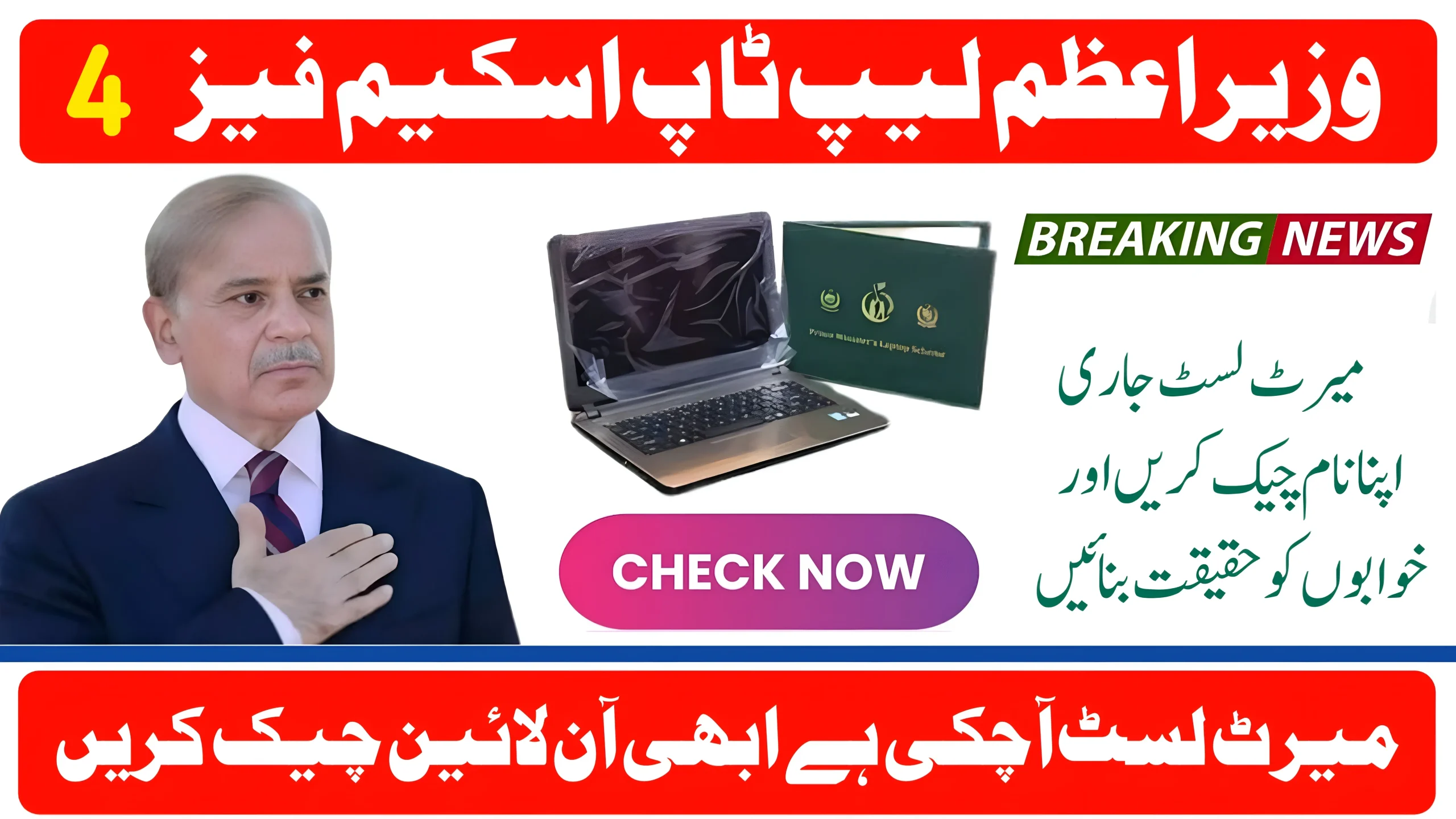
PM Shahbaz Sharif Laptop Scheme 2025: Bridging the Digital Divide for a Knowledge-Based Economy
The PM Shahbaz Sharif Laptop Scheme 2025 is poised to be a cornerstone of the government’s strategy for human capital development, aiming to provide millions of high-achieving and underprivileged students with the essential tools for modern education.
This initiative is more than a simple distribution program; it is a critical investment in the nation’s most valuable asset—its youth. By equipping students with technology, the scheme directly addresses the digital divide, fosters a culture of research and innovation, and enhances the employability of the next generation, ensuring they are not left behind in the global digital race.
Revival of a Vision: From Past Success to Future Expansion
The original laptop scheme, first launched during PM Shahbaz Sharif’s tenure as Chief Minister of Punjab, was widely recognized as one of the most successful youth welfare programs in Pakistan’s history. It distributed hundreds of thousands of laptops, positively impacting recipients’ academic and professional trajectories.
The PM Shahbaz Sharif Laptop Scheme 2025 is not merely a repeat but a significant evolution. Learning from past successes, the 2025 iteration is expected to be larger in scale, more transparent in its distribution mechanism, and tailored to meet the contemporary technological demands of a post-pandemic world where digital literacy is no longer a luxury but a necessity.
Objectives: The Core Mission of the Initiative
The scheme is built on a foundation of clear, strategic objectives designed to create a multiplier effect in the economy and society:
-
Digital Inclusion: To bridge the digital gap by ensuring talented students from low-income backgrounds have access to the same technological resources as their more privileged peers.
-
Academic Enhancement: To facilitate research, access to online educational content, digital libraries, and the completion of assignments, thereby raising the overall standard of academic work.
-
Skill Development: To enable students to learn critical software, programming languages, and digital tools, making them more competitive in the international job market.
-
Women Empowerment: To encourage and support the higher education of female students by providing them with the tools for independent learning and research.
-
Fostering Innovation: To create a generation of innovators, freelancers, and entrepreneurs who can leverage technology to start their own businesses and contribute to the national economy.
Eligibility Criteria: Who Qualifies for the Scheme?
To ensure the laptops reach the most deserving students, the government will implement a transparent eligibility framework. The expected criteria include:
-
Academic Enrollment: The applicant must be regularly enrolled in a recognized public sector university/degree-awarding institute in Pakistan.
-
Academic Performance: A strong academic record will be a primary criterion. This likely includes a minimum GPA/CGPA requirement (e.g., 3.0 and above) or placement within the top percentage of their class.
-
Financial Need: Preference will be given to students from low-income families. Data from the Benazir Income Support Programme (BISP) and university records may be used to assess need.
-
Level of Study: The scheme typically targets undergraduate (senior years), Master’s, MPhil, and PhD students.
-
No Previous Benefit: Students who have previously received a laptop from any government scheme will likely be ineligible to ensure a wider reach.
The Application Process: A Step-by-Step Guide
The government is expected to leverage a fully digital application process to ensure efficiency and transparency.
-
Portal Launch: The Higher Education Commission (HEC) will activate a dedicated online portal for the scheme.
-
Student Registration: Students will need to register on the portal using their official academic email and personal details.
-
Form Submission: Applicants must carefully fill out the online application form, providing accurate academic and financial information.
-
Document Upload: Scanned copies of required documents, such as CNIC, university registration card, transcript of the latest semester, and a declaration of financial status, will need to be uploaded.
-
Verification by Universities: The data submitted by students will be cross-verified by their respective university authorities to confirm enrollment and academic performance.
-
Transparent Merit-Based Selection: A merit list will be generated based on a predefined formula weighing academic performance and financial need. The list will be publicly displayed on the portal for transparency.
-
Distribution Ceremonies: Finally, laptops will be distributed to the shortlisted students at organized ceremonies at their respective universities.
Features and Specifications of the Laptops
While the final specifications will be determined through a public procurement process, the laptops are expected to be robust devices capable of handling academic workloads.
-
Processor: Modern, energy-efficient processors (e.g., Intel Core i5 or equivalent AMD Ryzen 5).
-
RAM: Sufficient RAM (8 GB minimum) for multitasking and running educational software.
-
Storage: Fast Solid State Drive (SSD) storage (256 GB or more) for quick boot-up and data access.
-
Operating System: A genuine licensed version of a modern operating system.
-
Pre-Loaded Software: May include essential academic software, antivirus protection, and links to digital libraries and HEC resources.
-
Warranty: A comprehensive nationwide warranty for repairs and maintenance.
Comparative Advantage: Scheme vs. Personal Purchase
The following table illustrates the significant benefit this scheme provides to students:
| Aspect | Personal Laptop Purchase | PM Shahbaz Sharif Laptop Scheme 2025 |
|---|---|---|
| Financial Burden | High upfront cost, often unaffordable for students. | Completely free for the selected beneficiary. |
| Quality & Specifications | Might compromise on specs due to budget constraints. | Provides a high-quality, specification-appropriate device for academic use. |
| Eligibility | Available only to those with immediate financial means. | Based on merit and need, ensuring deserving students benefit. |
| Support & Warranty | Individual responsibility to manage. | Likely includes a centralized warranty and support system. |
| Objective | A personal utility. | A national investment in human capital and digital equity. |
Expected Impact and Conclusion
The PM Shahbaz Sharif Laptop Scheme 2025 is anticipated to have a transformative impact on Pakistan’s educational landscape. It will level the playing field, allowing talent to flourish irrespective of economic background. By integrating technology into the daily lives of students, the scheme is planting the seeds for a more informed, skilled, and innovative workforce.
This initiative underscores a profound belief in the potential of the youth. It recognizes that in the 21st century, a laptop is not merely a device but a gateway to knowledge, opportunity, and global connectivity. The PM Shahbaz Sharif Laptop Scheme 2025 is, therefore, not an expense but a strategic investment in building a resilient, knowledge-based economy and a brighter, more digitally empowered future for Pakistan.